A View Of Waterford Crystal And A Legend
Ireland is famous for its Waterford Crystal. If you were to visit most any place in the world and mentioned the name Waterford, those hearing the name would immediately recognize it to be one of the most prestigious types of manmade glass in the world.
The first Crystal was made in 1883 in the community of Waterford Ireland. Two brothers, George and William Penrose began the glass operations on land owned by Quay Waterford. From the very beginning they set a goal for their crystal to be the finest in clarity, color and most defining, the cutting of the crystal by skilled crafts persons. Long before it became known, the glass produced by Waterford was covered by Europe’s Royalty and wealthy patrons who collected only the finest of crystal.
Upon entering the showroom, you are surrounded by hundreds of glass items, both large and small. Each lit perfectly to set off its sparkle and shine. Look closer, and you could see the glass was clear and perfect in its color. But what amazed me most, were the patterns cut into the glass. I will point out that this showroom is not somewhere a rambustious child could be taken.
After a time in the showroom, the tour entered into the factory where a couple dozen crafts persons were actively creating each piece by hand. Looking into the mold workshop you witnessed a skilled craftsperson make each item mold one piece at a time. In many ways the process of making crystals begins here, and each mold is meticulously created by hand. It was explained later that each mold can make at least a dozen pieces before needing to be replaced.
Next, molds are soaked in water and given to the molten glass workers. Glass is gathered and placed on a blowpipe to be placed inside the wet wooden mold for formation. With gentle, but strong breaths, the glass blower expands the molten crystal as it expands and begins to cool. After that process it is handed off to a man who turns the still hot glass on a roller using tools of different shapes and designs. Each of the steps is choreographed perfectly. The glass is then placed in an annealing oven for tempering.
At the next station an artisan takes each piece of glass and using only his eyes, along with patterns, marks onto the glass, where the cutter will follow. On the day we were there, wine glasses were being marked for cutting.
Just past the pattern artisan were the cutters. To become any of the people working there you must pass through a long and tedious apprentice program to be able to handle the glass.
At the first station a journeyman was working with what looked to be a large punch bowl. Following the pattern placed on the bowl by the artisan, he carefully cuts each groove into the bowl. I estimated the bowl had over five hundred cuts in the pattern. It would take him two days of cutting to finish the piece. By this time in the tour, you realized that the prices on items that were in the thousands for some pieces, was more than justified by the labor-intensive time it took to create each piece. Having told you of the human skills necessary, I was shocked to see the future as we were leaving the cutting room. Inside a glass box, a crystal flower vase was being cut, not by hand, but by a machine. It never tired or missed a cut. It was perfect in every aspect of the job. But somehow not having been created by a crafts person who has spent years refining their skills, it just didn’t seem to be of the same value as the one with a human touch.
Following our time at Waterford we next moved onto the Port of Cobh. I am sure you have heard of this famous harbor town during your life. Well, let me enlighten you. In order to reach the port, we had to take a ferry across a wide body of water to gain access to the Great Island in Cork Harbour. Cork has a maritime history stretching back hundreds of years. It began its life as a fishing village. After time and the depth of the harbor it grew into one of Ireland’s most important ports.
What is so important about this particular port? Over a hundred years ago the port city had another name, Queenstown. It was the port where the ill-fated Titanic made her final port of call. The Titanic arrived on April the 11th 1912 at 11:30 in the morning. She took on 123 passengers. She also offloaded a catholic priest who had plans to continue on to America. But the church hierarchy had other plans for the young priest.
His leaving the ship may have been forgotten if not for one thing, he was an avid photographer with his new Kodak box camera. He took several pictures that told the story of the Titanic’s time in port. When she was lost, those images froze in time the lives of hundreds that never saw the promised land.
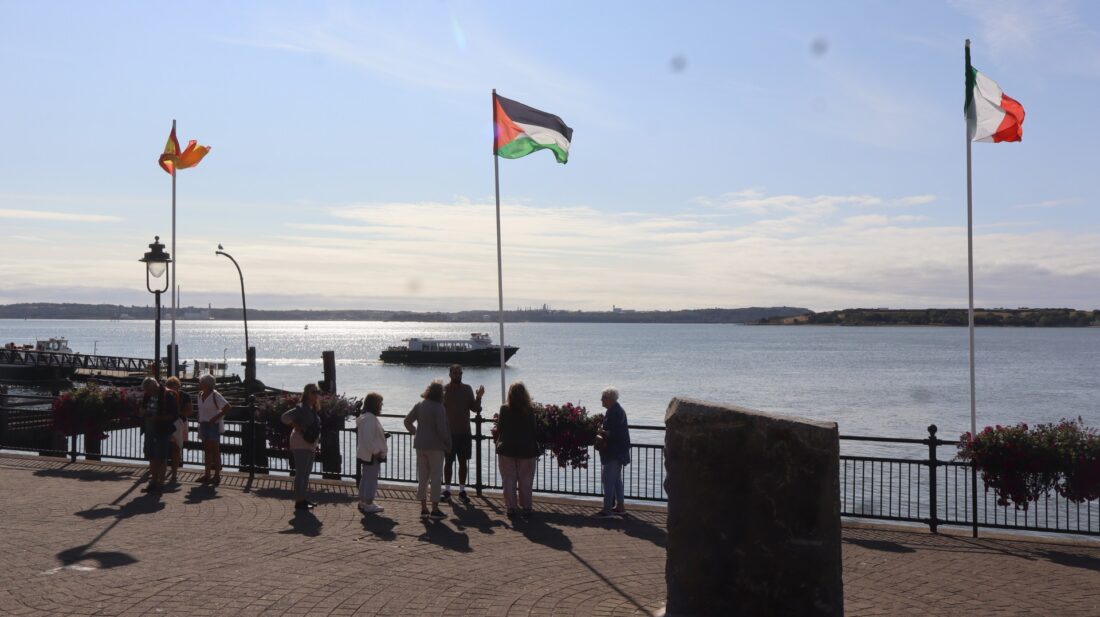
Standing alongside the harbor, you could look out to where the Titanic was anchored. And with a little imagination you could almost hear her whistle sound, as she said good-bye steaming out into the cold Atlantic, and Maritime’s legendary history.
Next week it is time to pucker up and kiss the Blarney Stone, as I tell you of the smooch Through the Lens.
Columns by Chuck Clegg
Dogwood Ghost — Part 1
It is the month of October, and the time of year more than any other time, we begin to hear stories and see images ...
A Visit To The Wall That Heals